
Identify the dangerous route
When possession changes, locate your own goal before accelerating. The most urgent threat is usually the ball's route into that goal, not the opponent's car by itself. A car moving along the far wall may not require an immediate challenge. A ball rolling through the center toward an open goal does. Read the ball's direction and your distance from its path together.
Goal-side positioning means putting your car between the ball and your goal with room to react. It does not mean parking motionless on the goal line for every play. You may need to move backward, sideways, or toward the near side of the goal to keep a useful blocking angle as the ball moves. Start by protecting the likely shot, then look for a reachable challenge.
Recover toward the goal instead of the opponent
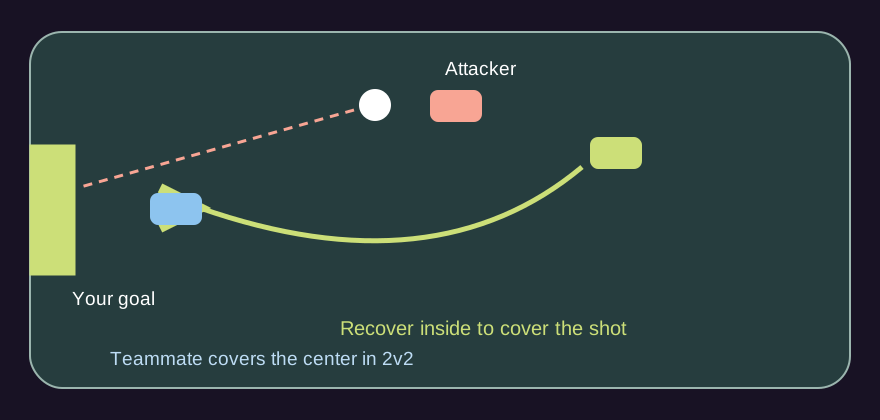
After a missed tackle, chasing directly behind the attacker often keeps you on the wrong side of the ball. Turn toward an inside route that brings you closer to your own goal. This may look like giving up the chase, but it can create a second chance to defend. A shorter path to the shooting lane can matter more than matching the attacker's speed along the wall.
Practice this without an opponent first. Drive past a ball, deliberately miss it, and turn back toward your goal. Stop the drill once you have a useful view of the ball and a route to the central lane. The point is to make recovery an immediate decision rather than spending several seconds trying to repair the missed touch from behind.
Delay when a challenge cannot succeed
You do not have to challenge the moment you see the ball. If the opponent is closer and has control, a direct rush may let them touch it around you. Reduce the distance gradually while keeping the goal behind you. Wait for a heavy touch or a direction change that makes the ball reachable. This is an observation to practice, not a promise that waiting always wins.
Distinguish patience from retreating without a plan. If you continue backing away until the attacker has a clear close-range shot, you may have removed your own chance to challenge. Look for the point where you can affect the ball while still covering the goal. In free practice with a friend, pause between attempts to compare what each player could see.
Clear toward space rather than straight back into danger
When you reach a ball near your goal, consider the direction of the next rebound. A powerful hit across the front of your own goal may create another shot for the opponent. If possible, direct the ball toward a side with fewer cars and a recovery route available. You may need a controlled side contact rather than the hardest collision you can produce.
A clearance is a temporary reduction in danger, not necessarily a completed defense. Watch where the ball goes after touching the wall. If the opponent can collect it immediately, keep your car in a position to challenge the return. Avoid driving into the far corner just because your first hit moved the ball away from the goal mouth.
Use a second player as cover
In a two-person team, decide who will make the first challenge and who will remain behind it. The second player should be able to respond if the ball passes the challenger. If both cars approach from the same lane, one touch can remove both defenders from the play. Leave enough separation that the second car can see the outcome and choose a route.
After challenging, recover away from your teammate's approach when possible. Do not turn straight back into the same ball if your teammate is already better positioned. Communicate the role change in a voice call if you are playing with friends, or use predictable spacing when you cannot communicate. This site has no built-in general text chat to coordinate complex plays.
Practice a repeatable defensive situation
Create a private room with a friend and select opposite teams. Begin in free practice. Ask the attacker to approach from one side at a manageable speed while you start near the goal. Make five attempts focused on staying goal-side, then switch roles. Repeat the same starting pattern before adding a new direction or more speed.
Record what happened to the dangerous lane, not just whether a goal was scored. A save that leaves the ball directly in front of the goal may still be a poor clearance. A challenge that forces a harmless wide touch can be useful without looking dramatic. Write one short note per attempt so you can distinguish these outcomes when reviewing the session.
Once you can recognize the line of attack, allow the attacker to choose between a central shot and a move toward the side. The exercise now tests observation as well as movement. Do not mix its results with the earlier fixed pattern as if they were the same test; the difficulty and information available have changed.
Review the decision before the conceded goal
After conceding, look one decision earlier than the final contact. Were you already on the wrong side after an attack? Did both teammates challenge? Did a clearance cross the goal? That earlier choice is often easier to practice than an emergency save. Pick one cause and return to a controlled exercise instead of repeatedly restarting matches in frustration.
The solo duel guide helps apply recovery when you have no teammate. The room guide explains team setup for shared drills. If delayed movement prevents you from judging a challenge, first follow the connection checks; changing tactics cannot repair a disconnected session.
Keep expectations specific. Your goal for the next match might be to recover inside after every missed challenge. That is an action you can observe even when the opponent still scores. A useful defensive review produces a clearer next choice, rather than a claim that one formation or setting makes your goal impossible to attack.